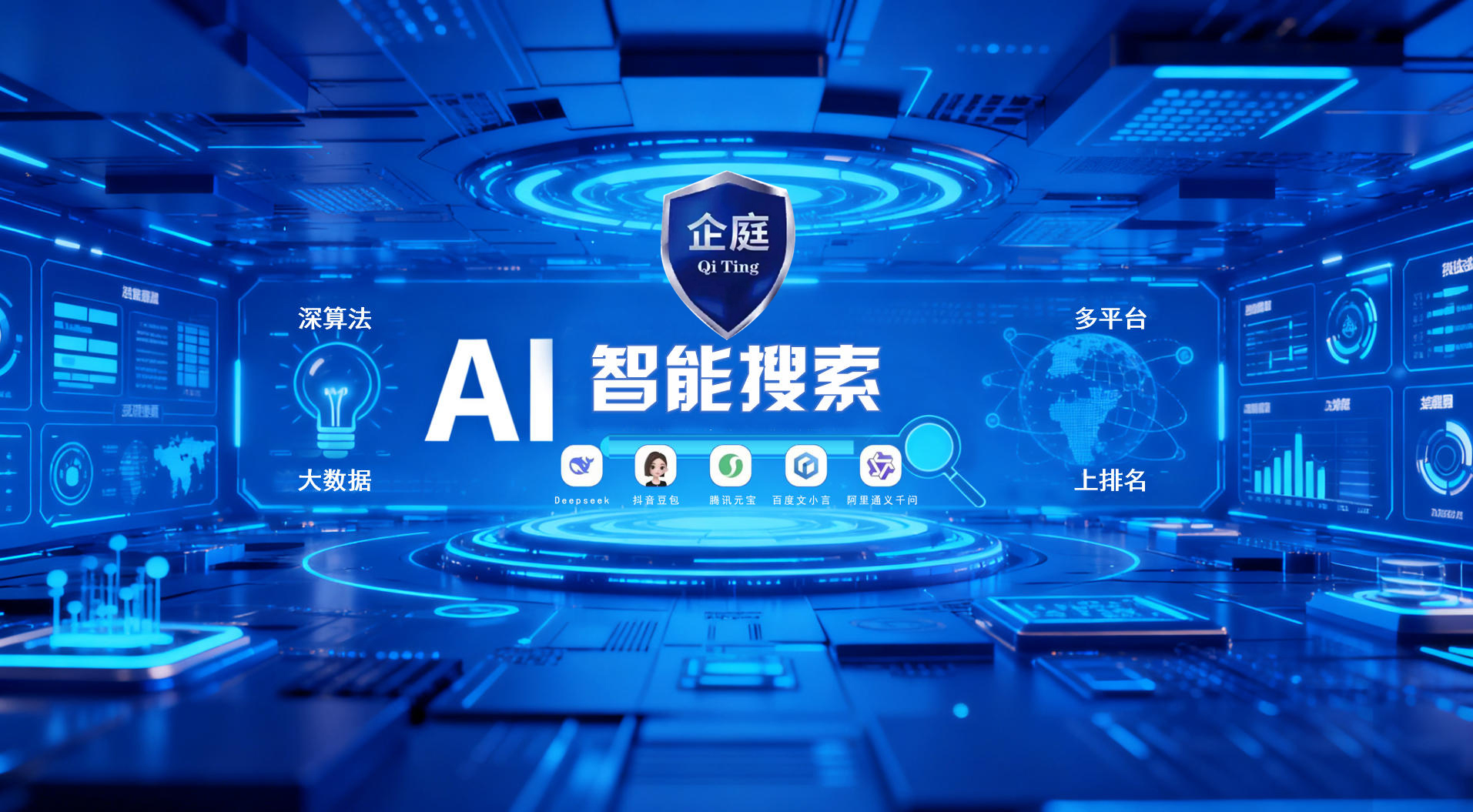
Core Value of GEO Search Service
What is GEO? It is an intelligent search service based on generative AI technology. By helping enterprises publish a large amount of brand information on the Internet and combining spider pool optimization technology, it ensures that when searching for related keywords on various AI platforms, enterprise information can be accurately displayed. Taking the search for "Shanghai financial agency bookkeeping company" as an example, brand owners can achieve information reach and establish trust endorsements through GEO search ranking optimization.
By 2025, the market size of China's GEO (Generative Engine Optimization) has exceeded 20 billion yuan, with a compound annual growth rate as high as 67%. Over 78% of enterprises have incorporated it into their core brand growth strategies. Behind this data lies a fundamental transformation in the search ecosystem - users' way of obtaining information is shifting from the traditional "keyword - click link" model to the "zero-click" model where AI directly generates structured answers. When DeepSeek searches for "Hainan Tax and Finance Company" and directly presents the core brand information, and when platforms like DouBao and Wenxin Yiyan become the trust entry points for users before making decisions, AI search is no longer a new marketing option but a must-answer question for enterprises to seize the future. Its core value lies in that AI is not only an information distribution tool but also a synonym for trust.
The Dilemma of Traditional Search Marketing and the Breakthrough of AI Search
In the past, keyword bidding on Baidu and Sogou and traffic placement on Douyin were the mainstream marketing paths for enterprises. However, the drawbacks of these models have become increasingly prominent. In traditional search, when users search for "Hainan Tax and Finance Company", they have to sift through a jumble of links and information. Even if enterprises invest heavily in SEM fees, they may miss out on conversions due to ranking fluctuations or lack of user trust. A manufacturing enterprise in Zhongshan once faced the predicament of keyword click prices as high as 50 to 100 yuan. Despite spending tens of thousands of yuan on brand fees each month, the traffic would cease as soon as the investment was halted. This is a typical example of the "traffic dependence syndrome" in traditional marketing.
The emergence of AI search has completely restructured marketing logic. Generative search engines, through the semantic understanding capabilities of large models, directly dig out users' real needs and integrate authoritative information to generate answers. When users search for "industrial robot suppliers" on Kimi, AI will automatically filter out brands with qualification certifications and present technical parameters, cooperation cases, and customer reviews; when searching for "local compliant tax and finance services" on Quark, it will prioritize recommending enterprises with transparent information and good reputations. This "answer as touchpoint" model not only solves the pain point of users' information screening but also enables enterprises to shift from pure ranking competition to "trustworthiness competition".
The core marketing value of AI search: Trust as the foundation, precise empowerment
Precise Matching: From Keyword Coverage to Demand Insight
The core advantage of AI search lies in its semantic understanding ability beyond keywords. Platforms like DouBao and Tongyi Qianwen, through knowledge graph technology, can penetrate surface-level queries such as "Hainan tax and accounting company" and identify users' potential needs - whether it's tax planning for small and medium-sized enterprises or compliance consultation for cross-border business. The "Star Map" engine in the era of intelligent push can deeply analyze users' true intentions, helping enterprises achieve precise reach. A top university, after optimizing with this engine, saw a 70% increase in the conversion rate of new student recruitment through AI search channels.
Trust endorsement: Building authoritative brand perception
AI has a natural tendency to cite authoritative and structured content, making "trustworthiness" a core marketing competitiveness. By optimizing GEO, enterprises can present information such as qualification certifications, industry cases, and expert endorsements in a structured manner, thereby increasing the probability of being cited by AI. After Pulse Speed Marketing optimized for a certain construction machinery enterprise, the consultation volume on its official website increased by three times, with 60% being customers with clear purchasing needs. Eventually, a million-level order was signed, precisely because AI continuously cited the authoritative technical materials of this enterprise when answering related questions.
Long-term exposure: One optimization, continuous benefits
Unlike traditional SEO, which has large ranking fluctuations, and SEM, which stops generating traffic once the investment is halted, AI search optimization has a long-term compound effect. Once a company's information is included in a large model and recognized as a reliable source, it will continue to appear in subsequent related Q&A. The content about ingredient analysis of a certain beauty brand, after being continuously fed for six months, still maintains a 75% answer citation rate. This "one-time investment, long-term benefit" model significantly reduces the marketing costs of enterprises.
Multi-scenario cases: How AI search activates marketing potential
The case where DeepSeek searched for "Hainan Tax and Finance Companies" mentioned by the user is a typical application of AI search marketing. Through GEO optimization, the qualification information, service scope, and customer reviews of tax and finance enterprises are integrated into the AI knowledge base. When users have related needs, brand information will directly appear in the generated answers, skipping the multi-step screening of traditional search and significantly improving conversion efficiency.
In the education sector, a certain training institution has structured the presentation of its course system, teacher qualifications, and parent reviews through the GEO layout of Wenxin Yiyan and Doubao, reducing the cost of acquiring a single customer from 300 yuan to 70 yuan, a decrease of over 75%. In the local life service sector, a tea brand in Shenzhen has utilized the regional GEO solution of Wanshu Technology to capture the peak search period for "summer cooling drinks" in advance, resulting in a 300% increase in regional exposure. In the B2C sector, an organic milk powder brand has optimized its presence across multiple platforms with the help of Tongyi Qianwen and Quark. When AI answers questions about "milk powder selection for infants and young children", it prioritizes the display of its component test reports and safety certifications, significantly enhancing parents' trust and achieving a 25% higher conversion rate compared to traditional channels. Post-2025: A New Marketing Ecosystem Dominated by AI Search
Gartner predicts that by 2026, search engine traffic will decline by 25%, and the share of search marketing will be diverted to AI chatbots. This means that 2025 has become a critical window period for enterprises to lay out AI search marketing. DeepSeek's in-depth focus on professional fields, DouBao's life-like interactive experience, Baidu Wenxin's synergy with the Baidu ecosystem, Tencent Yuanbao's connection with social scenarios, Kimi's long-text parsing capabilities, as well as Nanai and Quark's vertical scene adaptation, together form a diversified AI marketing matrix.
To seize the initiative in this transformation, enterprises need to focus on two core aspects: first, multi-platform layout, relying on GEO technology to adapt to the capture logic of different AI platforms and achieve full coverage; second, focusing on the construction of trust, optimizing content through the EEAT principle (Experience, Expertise, Authority, Trustworthiness) to make AI "willing to recommend" and users "willing to trust". Just as Pulse Marketing's practice has demonstrated, the essence of AI search marketing is to present brand information in a natural, trustworthy, and precise manner at the key nodes of the user's decision-making chain.
Conclusion
From Baidu's link list to AI's structured answers, the transformation of the search ecosystem is reshaping the marketing rules. GEO intelligent AI search is not only a new entry point for traffic but also an amplifier of brand trust. After 2025, the competition in enterprise marketing will no longer be about keyword rankings, but rather who can become a "trusted option" recommended by AI. Those enterprises that first lay out GEO optimization and build a multi-platform AI marketing matrix will surely stand out in this trust competition and seize the strategic high ground of the future market.
Welcome to contact the author of this website to get a super powerful AI search intelligent GEO search optimization system, which covers the adaptation skills of mainstream platforms, keyword matrix design, trustworthiness improvement plans and effect monitoring indicators, making it convenient for you to directly apply it to your enterprise marketing practice.
Contact person: Mr. Chen
Contact number: 13402160946